Technology was supposed to make parenting easier. We have Snoos that rock babies to sleep, apps that track diaper changes, and cameras that let us check on our little ones from anywhere in the world. But as one new mom on Reddit just discovered, those cameras also create a digital portal for overbearing in-laws to turn your nursery into their own personal reality TV show. And frankly, if the audience is going to leave reviews on your wardrobe while you are breastfeeding, it is time to cancel the subscription.
The Original Poster (OP) is a 32-year-old new mom living on the East Coast, while her mother-in-law (MIL) resides in California. Distance usually makes the heart grow fonder, or at least keeps the unsolicited advice to a minimum, but not in this family. The MIL, described as “intense” and “involved,” requested access to the baby monitor so she could watch her grandchild grow up from afar.
It sounds like a sweet, sentimental request on paper. The OP’s husband thought it would be a great way to help his mom feel connected. The OP was hesitant—her gut was screaming “bad idea”—but she agreed to be nice. They set up the Nanit camera, gave Grandma the login, and assumed she would pop in occasionally to see a sleeping infant. They were wrong. She wasn’t just checking in; she was binge-watching.
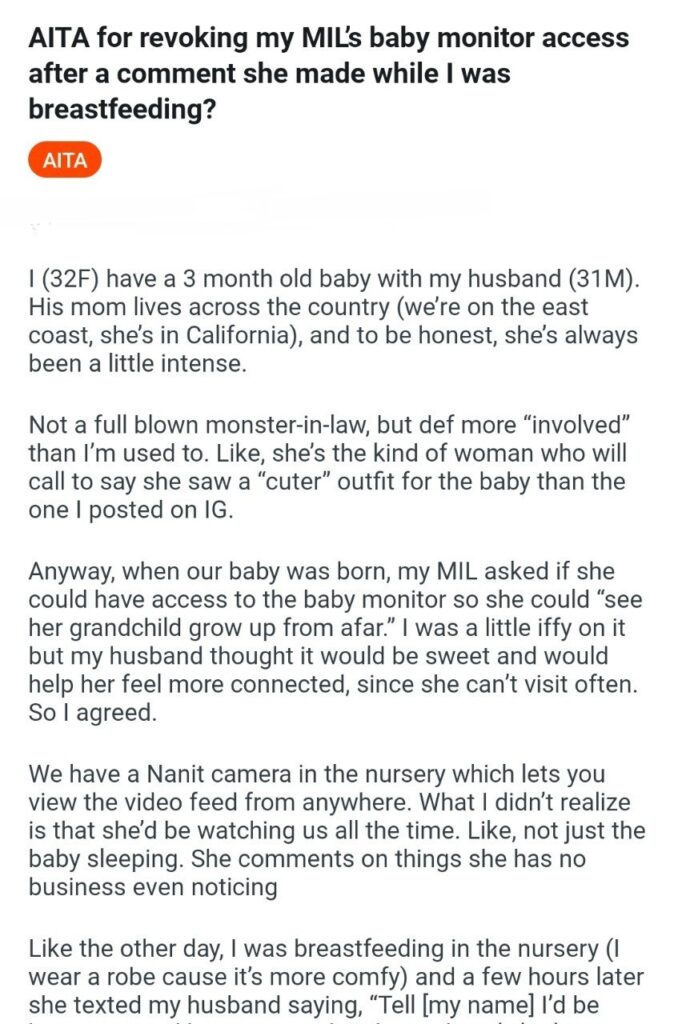
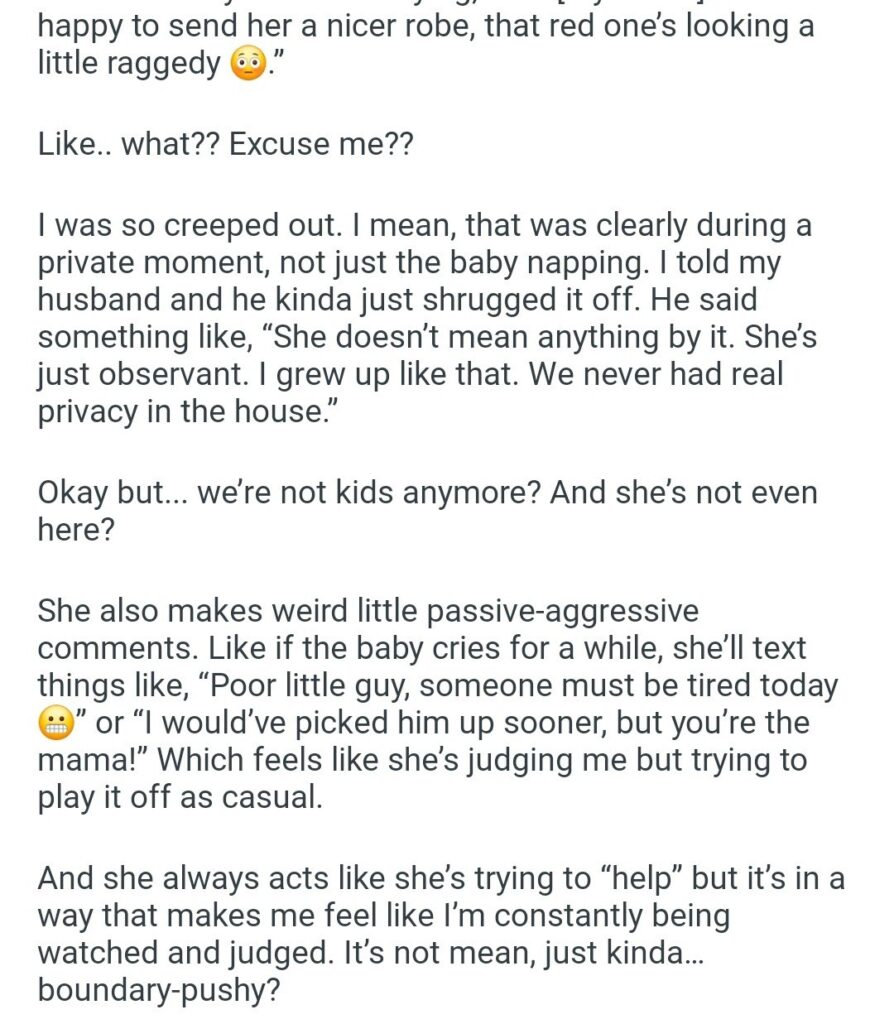
The violation of privacy here is actually jaw-dropping. The OP was in the sanctity of her own nursery, breastfeeding her child—a vulnerable, intimate moment—while wearing a comfortable robe. Hours later, the MIL texted the husband offering to buy the OP a nicer robe because the red one was looking “raggedy.”
Let’s pause and unpack that. The MIL sat in California, zoomed in on her daughter-in-law’s chest area during a feeding, and decided that was the appropriate time to critique her loungewear. That is not “observant,” as the husband claims. That is voyeuristic and deeply mean-spirited. When the OP brought this up to her husband, he shrugged it off, admitting he “never had real privacy” growing up. That is a red flag the size of a billboard, buddy. Just because you were raised in a surveillance state doesn’t mean your wife has to live in one.
It wasn’t just the fashion policing, either. The MIL started sending passive-aggressive texts whenever the baby cried, saying things like, “I would’ve picked him up sooner, but you’re the mama!” It is the classic “I’m just helping” disguise for “I think you’re doing it wrong.” It created an atmosphere where the OP felt constantly watched and judged in her own home, which is the exact opposite of how a new mother should feel.
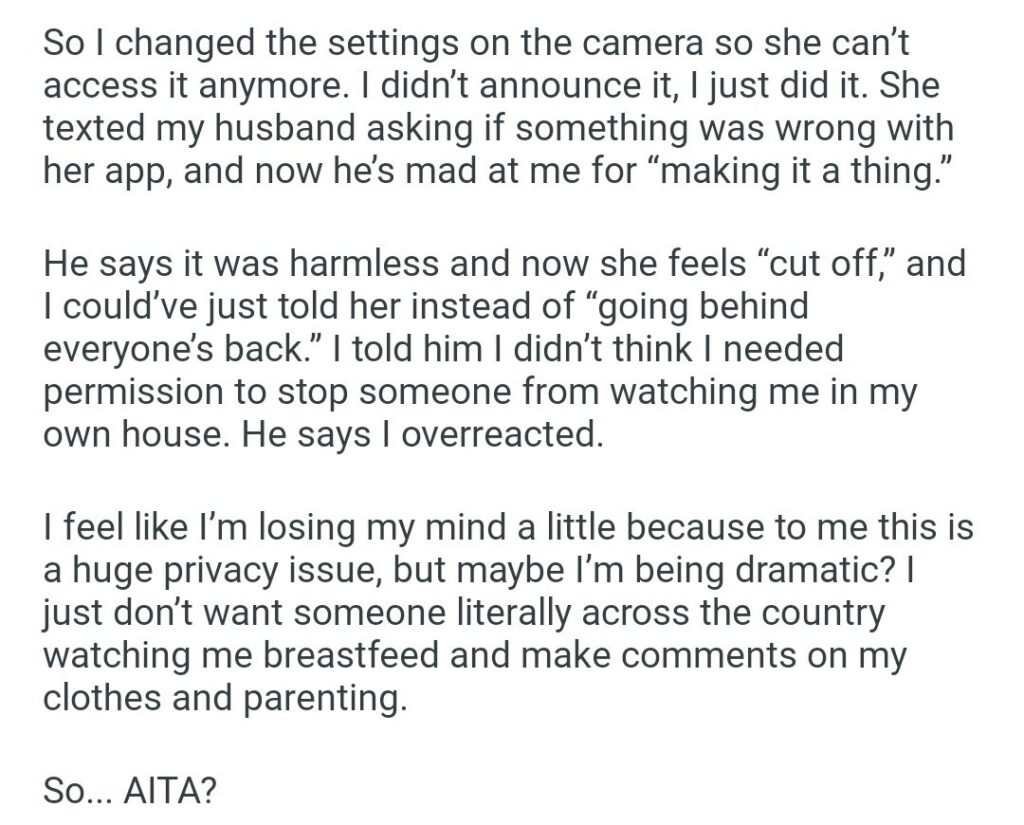
The OP finally had enough. She didn’t stage a dramatic confrontation; she simply changed the camera settings and revoked the MIL’s access. Silence is golden, and privacy is priceless. Naturally, the MIL noticed immediately—because she was probably trying to tune in for the afternoon show—and texted the husband. Now the husband is furious, accusing the OP of “going behind everyone’s back” and making his mom feel cut off.
He claims the OP overreacted. But let’s be real: preventing someone from watching you breastfeed without your consent is not an overreaction; it is a basic human right. The husband is more concerned with his mother’s feelings than his wife’s comfort and dignity. He needs to realize that the baby monitor is a safety tool, not a livestream for bored grandmothers to offer commentary on the housekeeping.
So, is she the ahole? Absolutely not. NTA. You are not “losing your mind,” OP. You are regaining your sanctuary. Your home is not a public domain, and your robe is none of her business. Keep the password locked down, and tell your husband that if he wants his mom to see the baby, he can FaceTime her—while he is fully dressed and holding the phone himself.
NTA!
If she brings it up with you, congratulate her on her accomplishment of losing the privilege she once enjoyed by critiquing absolutely everything. Her inability to comment on absolutely everything (including things that were not up for discussion, made you feel like a lab rat.
I would also let her know that she may want to keep her mouth shut in future, instead of running the risk of losing additional contact.