Grief is a messy, non-linear journey that looks different for everyone. There is no handbook for how to handle the loss of a partner, and there certainly isn’t a timeline for when you are allowed to be happy again. However, most rational people agree that once a gift is given—especially a symbol of eternal commitment—it belongs to the recipient, regardless of the tragedy that follows. One woman on Reddit is currently dealing with a former mother-in-law who seems to think that finding new love means you have to erase the past, and her demand is leaving the internet speechless.
The OP (Original Poster) survived a horrific car crash eleven years ago that instantly killed her fiancé. It is the kind of trauma that defines a life. She spent years in and out of therapy and support groups trying to put the pieces back together. It was in one of those support groups that she met her current partner, a forty-five-year-old widower who lost his wife to cancer. It sounds like the plot of a tear-jerker movie: two broken people finding solace in someone who truly understands the weight of their loss.
They moved in together, marking a huge step forward. But apparently, this happiness was a signal for the OP’s former mother-in-law to circle back with a ridiculous request. The mother, whom the OP has remained close with for over a decade, asked for the engagement ring back. Her reasoning? Since the OP is now “seriously involved” with another man, the ring should return to the “family.”
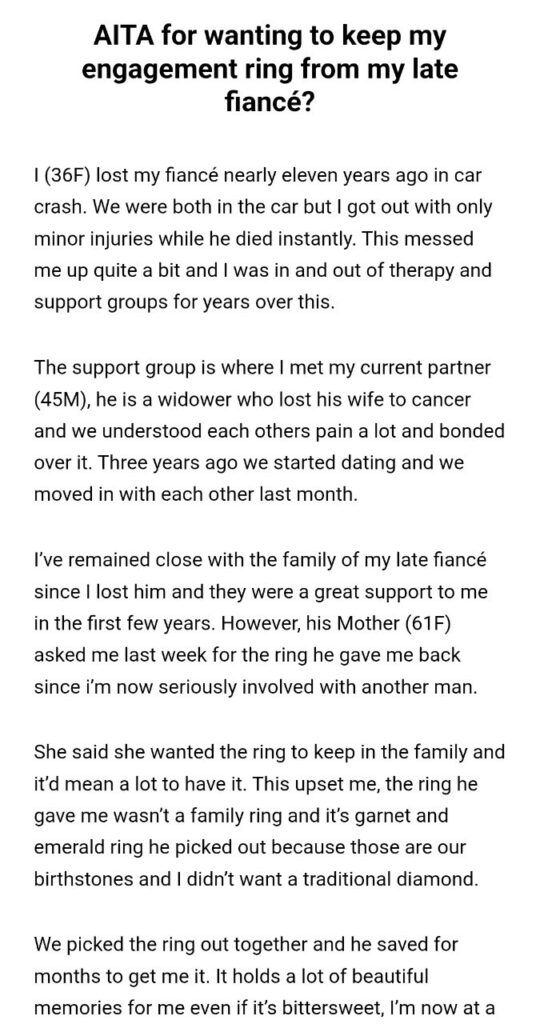
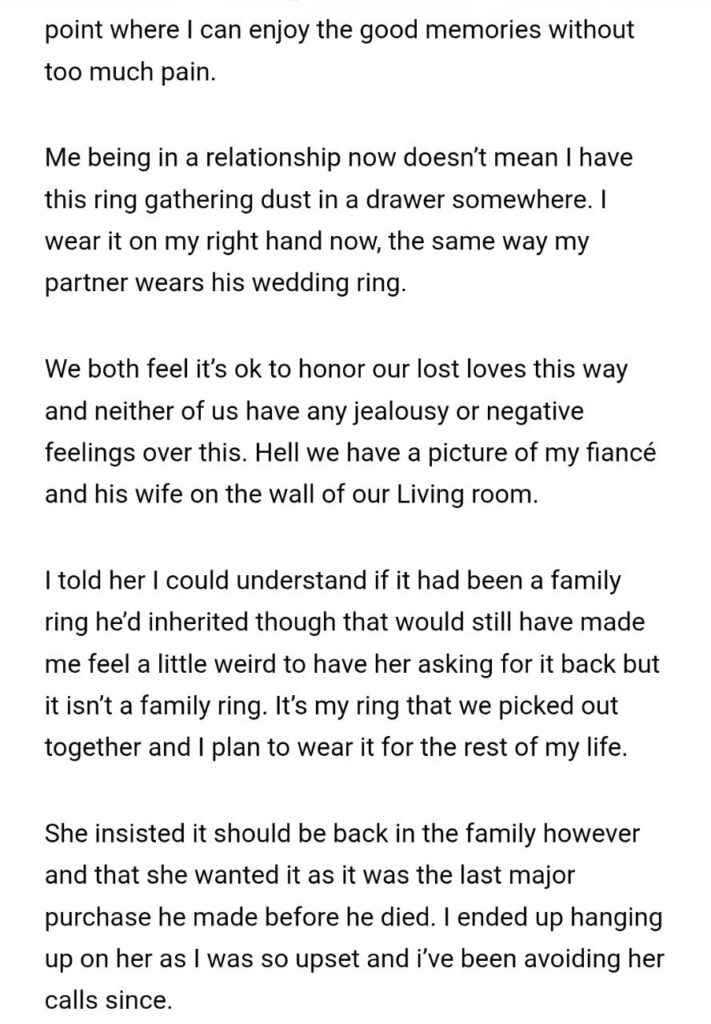
Here is the kicker: this wasn’t some great-great-grandmother’s diamond that was smuggled out of the old country. It was a custom garnet and emerald ring that the couple picked out together because they represented their birthstones. The late fiancé saved for months to buy it specifically for her. It isn’t a family heirloom; it is a personal artifact of their relationship. The OP wears it on her right hand to honor him, just as her current partner wears his late wife’s wedding ring.
The fact that the OP and her partner have created a space where they can honor their past loves—even hanging photos of their late spouses in the living room—is incredibly healthy. They aren’t trying to replace the people they lost; they are growing around the grief. But the mother-in-law sees it differently. She insists she wants the ring because it was the “last major purchase” her son made. It feels bizarrely transactional, as if she is trying to repossess his assets rather than respect his final act of love.
When the OP explained that she plans to wear the ring for the rest of her life, the mother didn’t back down. She insisted it belongs to the family. The OP, feeling punished for finally finding happiness, ended the call in tears. It feels like the mother believes that if the OP loves someone new, she inevitably loves the deceased fiancé less, which simply isn’t how the heart works.
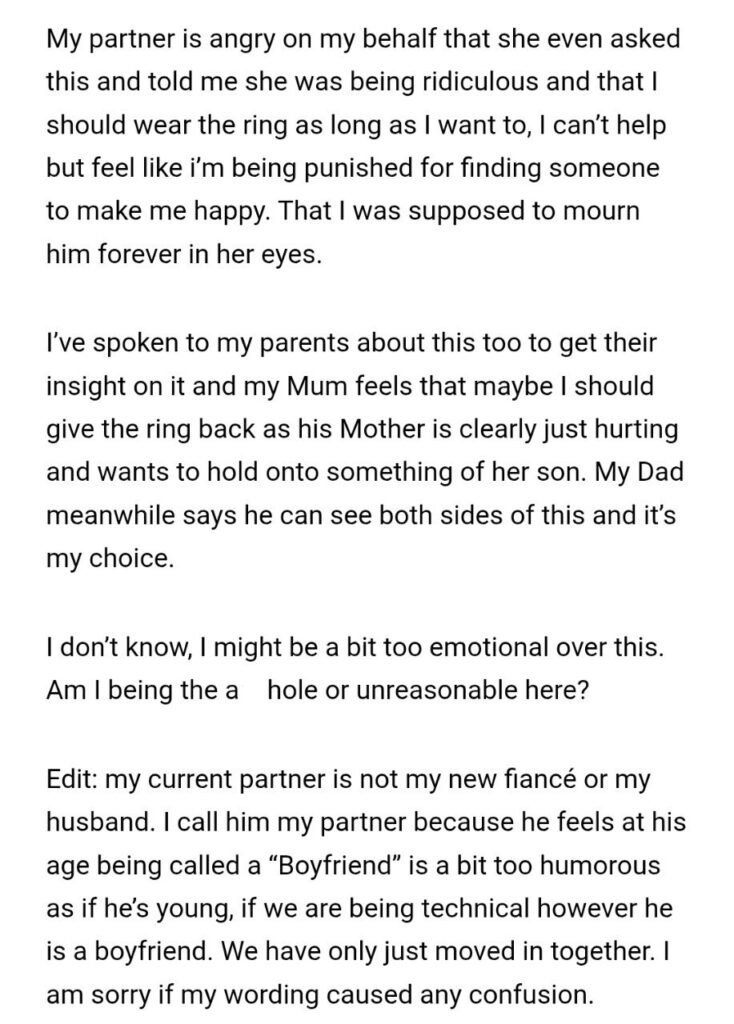
The OP’s current partner is absolutely right to be angry on her behalf. The audacity to ask a surviving partner to return the symbol of their engagement because they didn’t die alone is cruel. It suggests that the OP’s ownership of the ring—and by extension, her grief—is conditional. It implies she is only “widowed enough” to keep the ring as long as she remains lonely.
Even the OP’s own mother suggested giving it back to soothe the older woman’s pain, which is terrible advice. Enabling someone’s inability to let go doesn’t help them; it just hurts you. The ring is not a rental. It was a promise. Just because the fiancé died doesn’t mean the promise or the memory belongs to his mother now.
So, is the OP the ahole? Absolutely not. That ring is hers by right, by law, and by love. The mother is clearly hurting, but trying to strip her son’s fiancée of her most precious memento isn’t the way to heal.
What would you do if a former in-law demanded a sentimental gift back after a decade? Would you hand it over to keep the peace, or would you stand your ground like the OP? Let us know in the comments if you think the ring stays or goes!